Meditation Pavilions
Three open-air cedar pavilions with living roofs provide shaded sanctuaries for extended phytoncide exposure and contemplation. Each structure is surrounded by 6-foot rosemary hedges, creating intimate enclosures with 500-700 ppb phytoncide concentrations.
The cedar timber releases cedrol—a sesquiterpene with sedative and stress-reducing properties—while the living roof of thyme and creeping rosemary adds additional aromatic layers. Built-in curved benches accommodate 6-8 people for group meditation or solo contemplation.
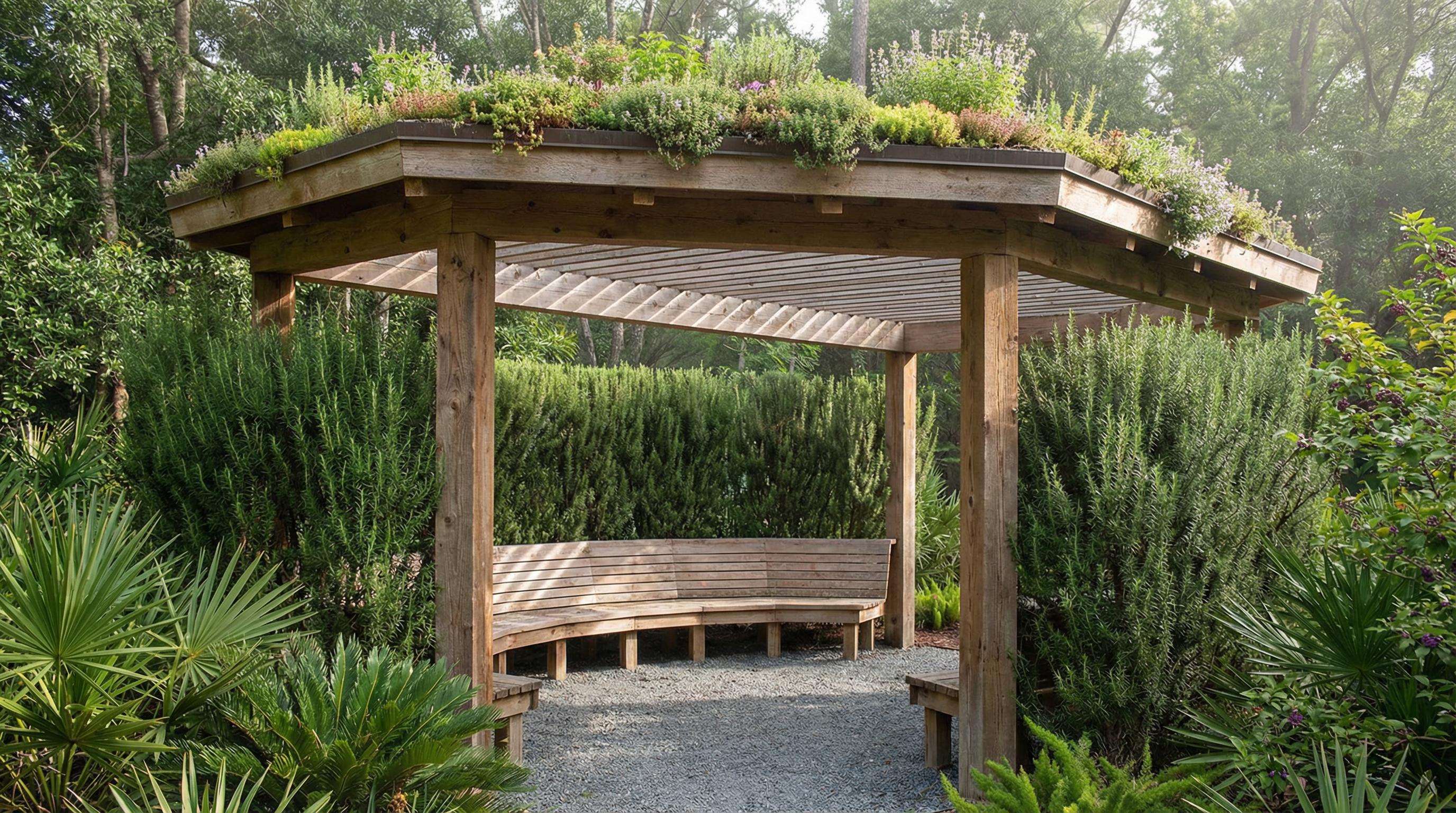
Trail Entrance Pavilion
Located at the Shinrin-yoku trail entrance, this pavilion serves as the opening circle space where guides introduce the practice and visitors set intentions.
Use: Group orientation, opening ceremonies
Forest Midpoint Pavilion
Positioned at the trail's halfway point, this pavilion offers rest and reflection in the densest phytoncide zone, surrounded by mature pines and rosemary corridors.
Use: Extended meditation, breath work
Labyrinth Center Pavilion
At the labyrinth's center, this pavilion provides the final integration point for combined Shinrin-yoku and labyrinth experiences, with views across the entire garden.
Use: Closing circles, gratitude practice
10 Sensory Engagement Stations
Based on the Association of Nature and Forest Therapy's "invitation" model, these stations guide visitors through mindful sensory exploration, deepening their connection to the healing landscape.
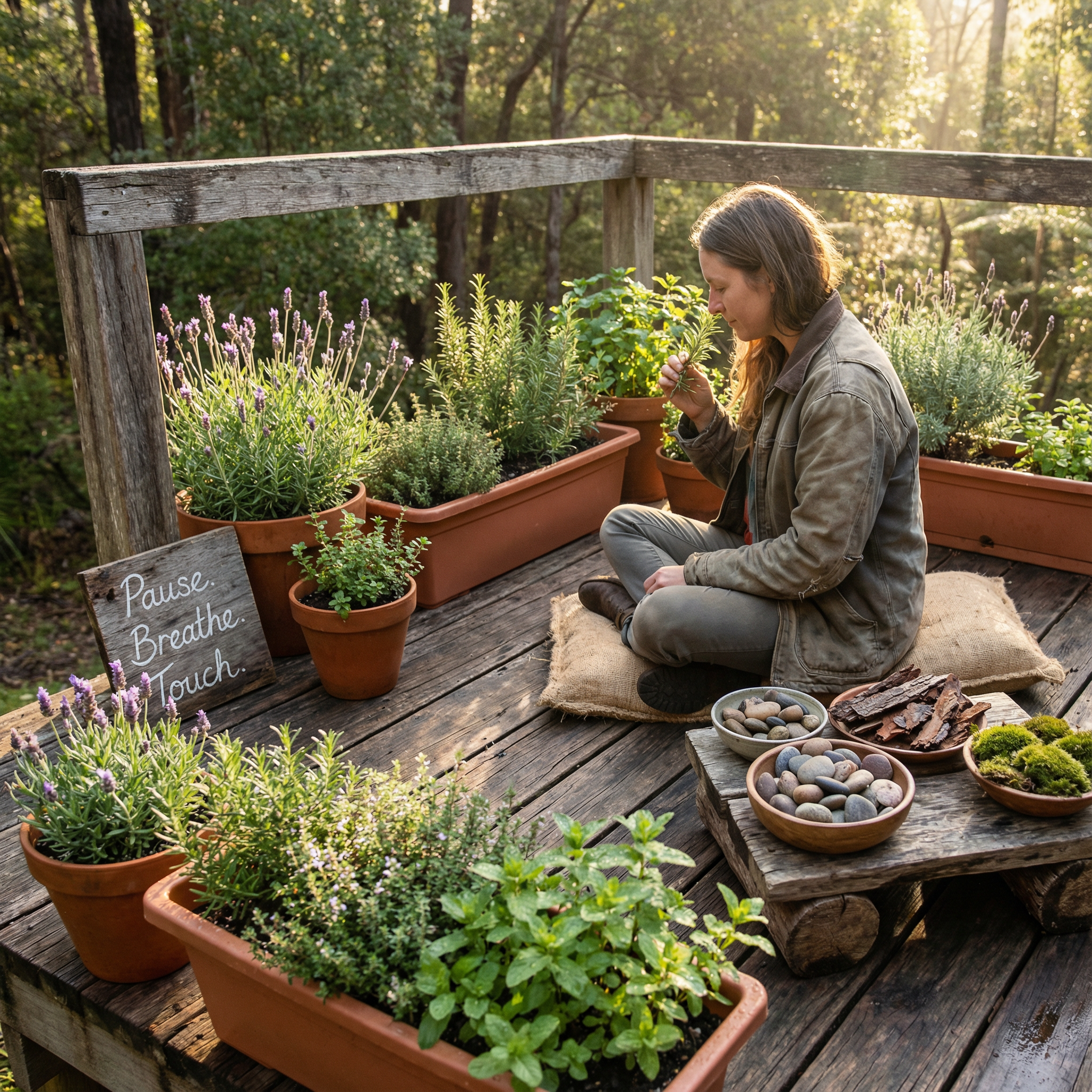
Designed for Deep Engagement
Each station features a wooden platform or deck with comfortable seating, surrounded by concentrated aromatic plantings. Subtle interpretive signs offer gentle "invitations"—open-ended prompts that encourage exploration without prescribing specific outcomes.
Opening Circle
Set intentions
Pleasures of Presence
Notice what draws you
Scent Journey
Explore aromas
Texture Exploration
Touch & feel
Sound Meditation
Listen deeply
Breath Work
Deep breathing
Mindful Movement
Gentle stretching
Taste Station
Sample herbs
Gratitude Practice
Reflect & journal
Closing Circle
Share & integrate
Healing Water Elements
Three water features throughout the garden enhance phytoncide volatilization, generate negative ions, and provide soothing soundscapes that activate the parasympathetic nervous system.
Moving water increases ambient humidity by 15-20%, which in turn boosts phytoncide release from surrounding plants by 20-30%. The negative ions produced by flowing water have been shown to improve mood, reduce stress hormones, and enhance cognitive function.
Central Fountain
Located at the labyrinth's center, this fountain is surrounded by concentrated aromatic herbs. The mist from the fountain carries phytoncides throughout the labyrinth space.
Sound: Gentle bubbling for meditation
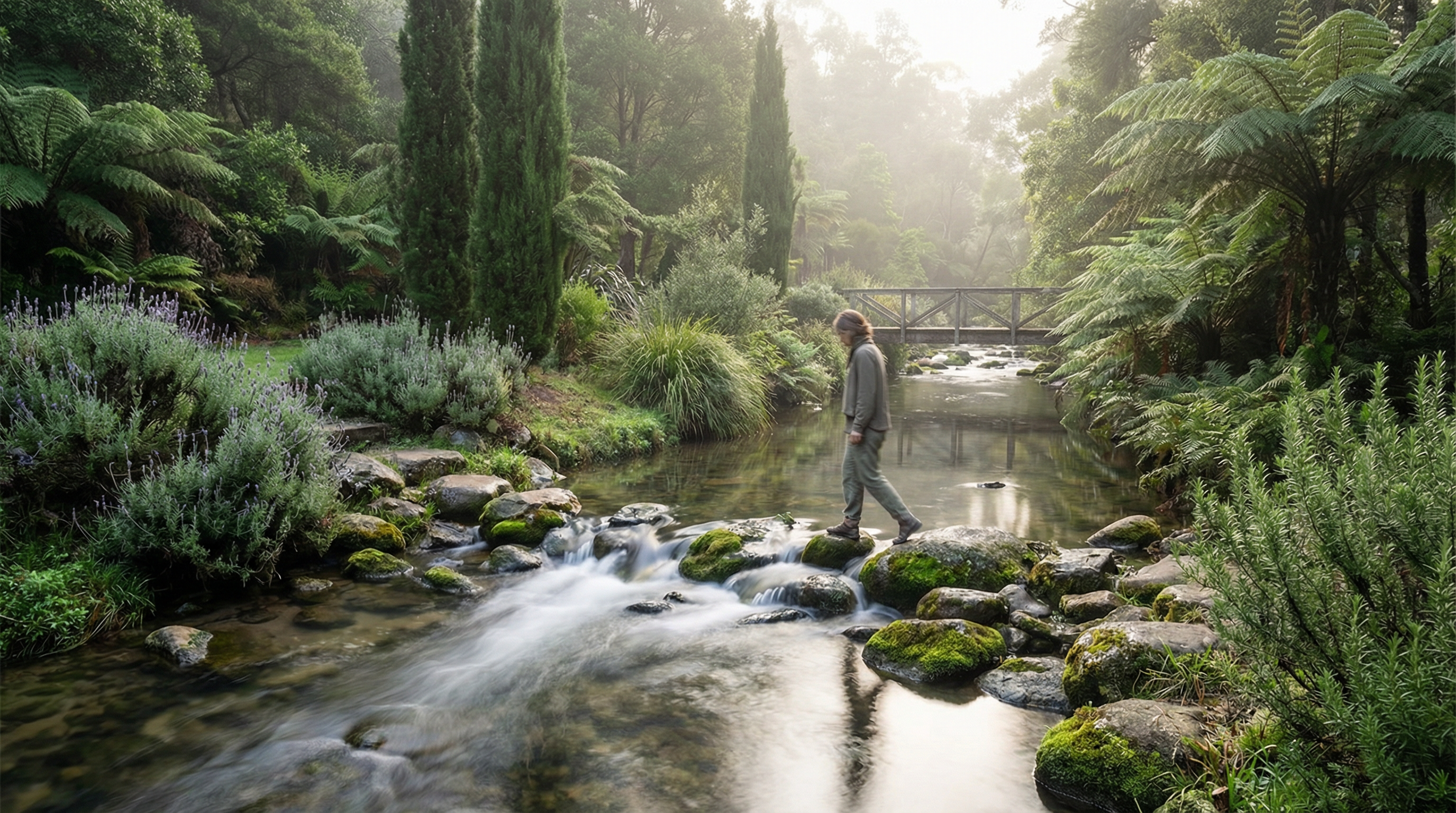
Forest Stream
A natural stream with smooth river stones and stepping stones winds through the Shinrin-yoku trail, creating a dynamic water feature that engages multiple senses.
Sound: Flowing water for deep relaxation
Misting Stations
Periodic misters along the trail create localized humidity increases, optimizing phytoncide volatilization in key zones. Especially effective during Florida's dry season.
Operation: Timed intervals, 5-10 minutes
Graduated Phytoncide Zones
The garden is designed with four distinct phytoncide intensity zones, allowing visitors to choose their exposure level based on experience, sensitivity, and therapeutic goals.
Gentle Introduction
- Open meadow with scattered pines
- Wide paths, high visibility
- For beginners, children
Moderate Immersion
- Mixed canopy, rosemary hedges
- Labyrinth location
- Standard therapeutic dose
Deep Therapy
- Dense pine/cedar grove
- Narrow trails, enclosed feeling
- For experienced visitors
Peak Concentration
- Pavilion + rosemary walls
- Enclosed herb garden
- Short-duration intensive
Optimal Protocol
For maximum therapeutic benefit, progress through the zones gradually:
- 1. Start in Zone 1 for 10-15 minutes (acclimation)
- 2. Move to Zone 2 for labyrinth walk or trail segment (20-30 min)
- 3. Enter Zone 3 for main Shinrin-yoku experience (60-90 min)
- 4. Finish in Zone 4 pavilion for peak exposure (10-15 min)
Total: 2-3 hours for 60-80% NK cell boost
Experience the Complete Sanctuary
Every element of Eden Labyrinth Garden is designed to maximize your healing journey. Explore the full experience today.